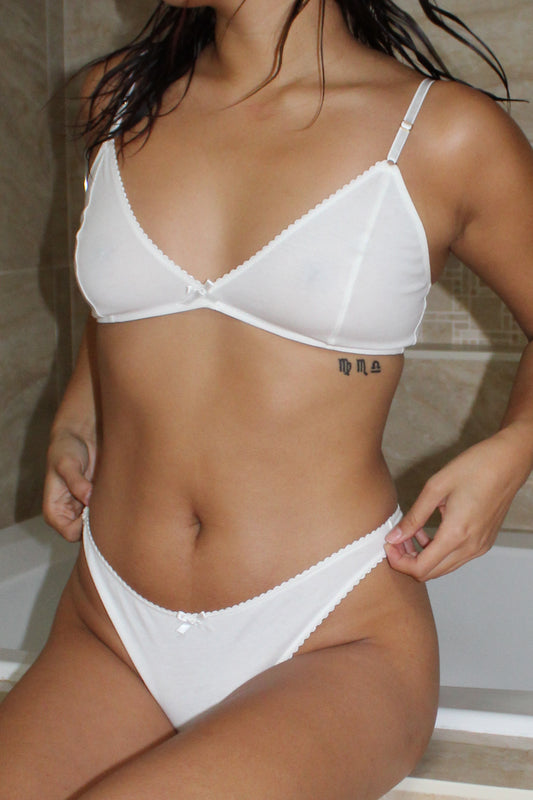
We chose our fabrics the way you'd choose a house to live in: by touch first, then by everything we learned about where they came from. This is what we found.
The fibres we love
| Fibre | How it feels | Best for | Care |
|---|---|---|---|
| Organic cotton | Soft, matte, breathable; softens with every wash | Everyday briefs, bralettes, sleepwear | Cool wash, line dry |
| Linen | Crisp at first, then fluid; cool in heat | Summer sleep sets, loungewear | Cool wash, hang to dry, embrace the creases |
| Silk | Smooth, light, holds warmth close | Slips, camisoles, special pieces | Hand wash cold, dry flat in shade |
| Wool (fine merino) | Warm without weight, naturally odour-resistant | Socks, winter layers, cold mornings | Hand wash cool, dry flat |
[confirm: which of these are in the current collection, and any certifications, e.g. GOTS for cotton]
Organic cotton, our foundation
Most of what we make starts here. Organic cotton is grown without synthetic pesticides or fertilisers, and it's the fibre we trust most against skin, day after day. It breathes, it washes well, and it gets better with time instead of worse. Think of it as the white tank top of fabrics.
A note on stretch
Some pieces need a little give to fit and stay put. Where we use elastane, we keep it to the smallest amount that does the job [confirm %], and we tell you on the label. We'd rather be honest about a blend than pretend a garment is something it's not.
What we avoid
- Heavy synthetic finishes that make fabric feel slick but don't let skin breathe.
- Fabrics that pill or lose shape after a few washes. If it won't last, it isn't worth making.
- Vague claims. If we call something natural or organic, we'll tell you exactly what that means.
How to choose for yourself
Touch first.
Then read the label.
Then ask how it will feel at 4pm, not just when you put it on. The best material is the one you forget you're wearing, until you notice, late in the day, how good you still feel.