There's an old tree on a riverbank that grew sideways, pushed by decades of wind. It didn't snap. It bent, and kept growing. We think about it often, because it says something about how good things age: not by resisting time, but by moving with it.
Longevity is a practice, not a product
The word has been borrowed by supplements and cold plunges lately. But long life, in the older sense, was always about daily rhythm. Rising with the light. Eating simply. Moving the body every day. Resting well. Ayurveda calls this dinacharya, the daily routine. It isn't dramatic. It's steady.
What we wear is part of that rhythm, whether we notice it or not. You sleep in it, move in it, rest in it.
What lasting clothes have in common with lasting bodies
- They breathe. Natural fibres let heat and moisture move. Skin that can breathe is skin that's comfortable for hours, not minutes.
- They flex. A good knit or a well-cut seam moves with you, like a body that's kept its range.
- They're cared for. A garment washed gently and dried in the air will outlive one that's tumbled hot every week. So will you, with rest.
- They get better. Organic cotton softens. Linen relaxes. Silk takes on a glow. The best materials improve with use.
The opposite of fast
Fast fashion is built to be replaced. That's the business model. It asks you to keep buying, keep discarding, keep deciding. Pieces made to last ask something different: that you choose once, choose well, and wear them for years.
There's a calm in that. Fewer things, better known. A drawer that feels like a collection rather than a pile.
Made to stay
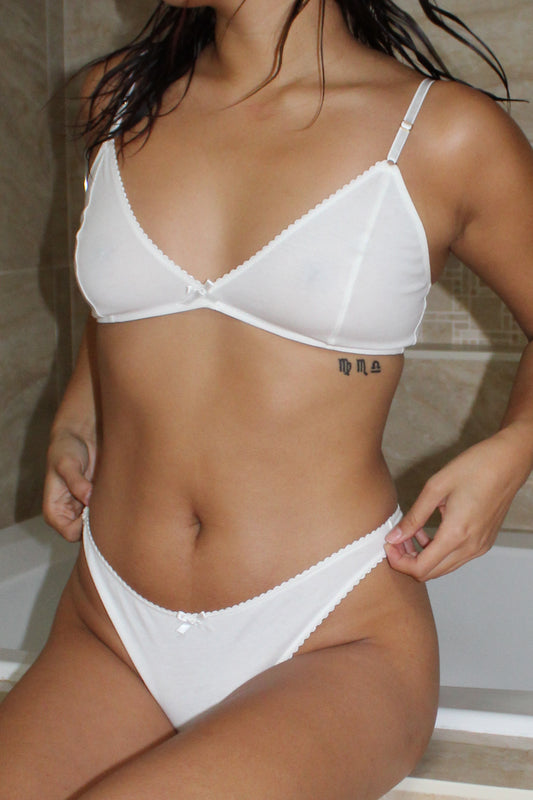
We design Singla pieces to become the ones you keep: the bralette that's softer in its third year than its first, the slip you pack for every trip. [confirm: any wear-testing or durability detail you'd like to cite]
Like the tree on the riverbank, the goal isn't to stay the same. It's to bend, soften, and keep going.